Localized Analysis: Institutional Buyer Trends in Your Zip Code
Localized Analysis: Institutional Buyer Trends in Your Zip Code
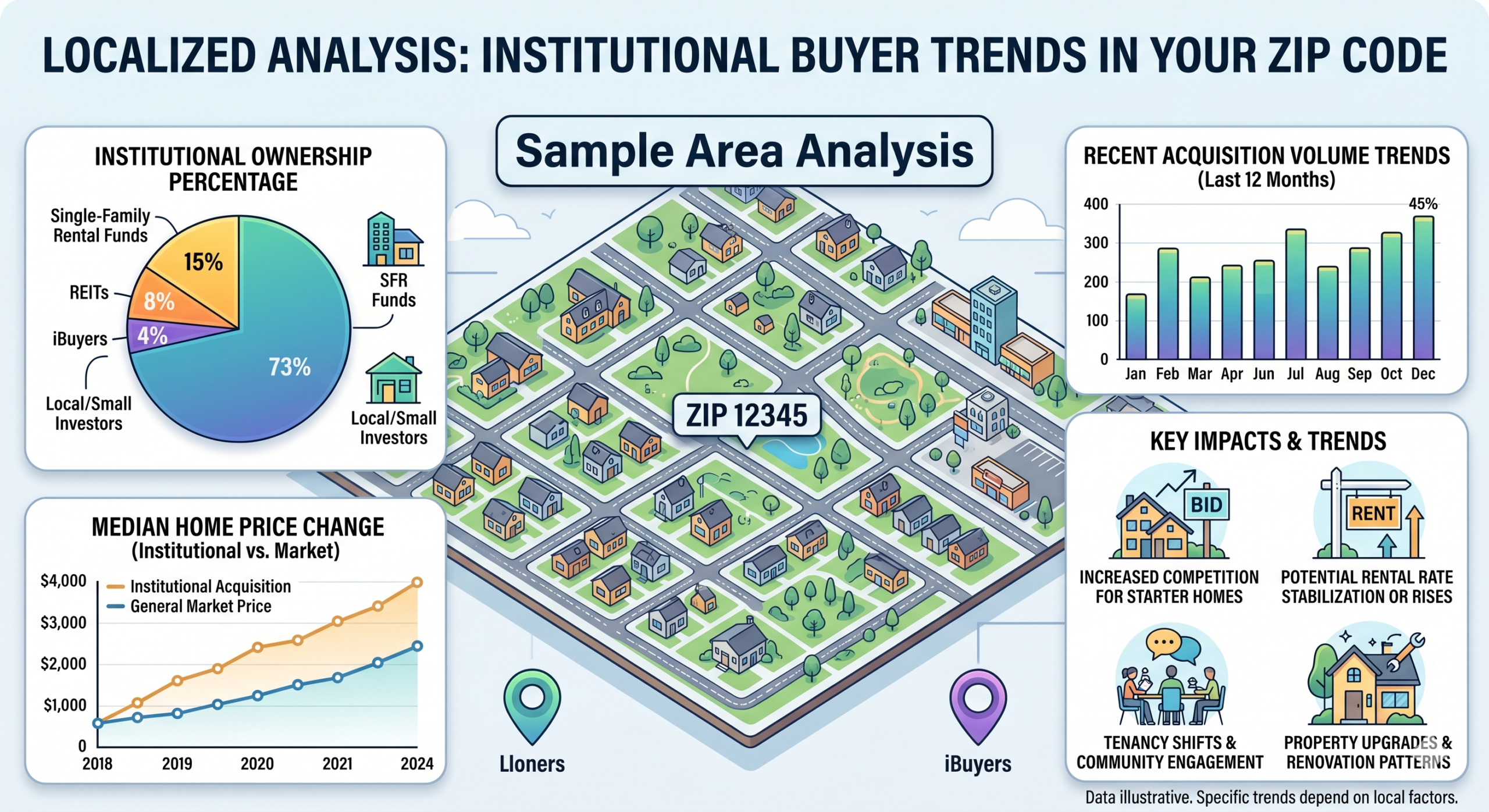
As we navigate the fiscal landscape of 2026, the real estate market has undergone a significant structural shift. The localized institutional buyer presence has transitioned from a niche phenomenon to a dominant market force, influencing property values, rental rates, and inventory availability at the granular zip-code level. Understanding these trends is no longer optional for homeowners or individual investors; it is a necessity for financial literacy in the modern era.
Featured Snippet: What is the current institutional investor market share in 2026?
As of Q2 2026, institutional investors—defined as entities owning more than 1,000 properties—account for an average of 18.4% of single-family home purchases nationally. however, in high-growth ‘hot’ zip codes, this institutional investor market share can exceed 35%, primarily driven by build-to-rent (BTR) strategies and algorithmic acquisition models that prioritize yield-dense suburban corridors.
The Evolution of Institutional Acquisition in 2026
The real estate market data 2026 reveals that institutional activity is no longer confined to Sun Belt metros like Atlanta or Phoenix. Sophisticated data modeling has allowed Real Estate Investment Trusts (REITs) and private equity firms to identify undervalued assets in secondary and tertiary markets. This localized institutional buyer presence is often characterized by ‘all-cash’ offers that bypass traditional appraisal contingencies, effectively setting a new floor for local pricing.
Key Drivers of Institutional Demand
- Yield Compression in Commercial Sectors: With office spaces still recovering, capital has flowed into residential Single-Family Rentals (SFR).
- Algorithmic Pricing: AI-driven platforms now identify ‘buy-box’ properties within seconds of listing.
- Proprietary Management Tech: Lowered overhead for managing scattered-site portfolios has increased the scalability of institutional ownership.
Market Performance Metrics: Institutional vs. Retail
To understand the impact on your specific zip code, it is essential to compare how institutional entities operate versus traditional retail buyers. The following table highlights the performance benchmarks observed in the current 2026 market environment.
| Metric | Retail Buyer (Individual) | Institutional Buyer (REIT/PE) |
|---|---|---|
| Avg. Days to Close | 30-45 Days | 7-14 Days (Cash) |
| Inspection Contingency | Standard / High Frequency | Waived / Information Only |
| Purchase Premium | Market Value | 2-5% Over Ask (Avg.) |
| Target Hold Period | 7-10 Years | 15-30 Years (Perpetual) |
How to Identify Institutional Presence in Your Zip Code
Homeowners often ask how they can determine if their neighborhood is being targeted by large-scale investors. By analyzing real estate market data 2026, several red flags emerge that indicate a high localized institutional buyer presence.
Checklist for Homeowners and Local Investors
- Search Public Records: Look for repetitive LLC names or Delaware-registered entities on recent grant deeds.
- Analyze Rental Density: High concentrations of professionally managed ‘For Rent’ signs often signal institutional clusters.
- Monitor ‘Sold’ History: Properties that sell and reappear as rentals within 30 days are a primary indicator.
- Observe Maintenance Uniformity: Institutional owners often use standardized paint colors and landscaping across their portfolios.
Impact on Local Community Dynamics
While institutional capital provides liquidity and can stabilize declining areas, a high institutional investor market share also presents challenges. It often leads to ‘starter home’ scarcity, as the price points traditionally accessible to first-time buyers are exactly what institutional ‘buy-boxes’ target. This creates a ‘rentership’ society in zip codes that were historically owner-occupied.
Frequently Asked Questions
Do institutional buyers pay more than fair market value?
Often, yes. Because institutional investors look at the Net Present Value (NPV) of a 30-year rental stream, they can justify a higher entry price than a retail buyer who is limited by monthly debt-to-income ratios and immediate appraisal gaps.
How does a high institutional presence affect my property taxes?
Increased acquisition prices at the zip-code level lead to higher comparable sales (comps). This typically results in increased assessed values during the next county tax cycle, potentially raising property taxes for all residents in that area.
Can I compete with an institutional offer?
Competing requires speed and certainty. Offering a larger earnest money deposit, shortening the inspection window, or providing a ‘rent-back’ period to the seller can sometimes outweigh the pure cash advantage of an institutional buyer.
What is the forecast for institutional buying in late 2026?
Forecasts suggest a plateauing of market share as inventory remains tight, but a shift toward ‘Build-to-Rent’ communities where institutions act as the developer, owner, and manager from the ground up.